28 Jul 2026
Instant Transaction Systems Facilitating Movement Between Automated Reel Games and Live Dealer Formats
 Payment processing speeds have increased across digital gaming platforms in recent years, according to industry reports. These systems allow account balances to update within seconds after a deposit completes, which in turn supports player movement from automated reel games into sessions with live dealers. Data from payment gateway providers indicates that average transaction times dropped below ten seconds in many licensed markets by early 2026.
Core Components of Rapid Funding Infrastructure
Automated reel games operate on random number generators that run continuously, while live dealer sessions rely on real-time video streams and human interaction. The connection between these formats depends on funding mechanisms that clear without manual intervention. Electronic wallet integrations and bank transfer APIs handle verification through token-based authentication, allowing funds to appear in player accounts almost immediately after authorization.
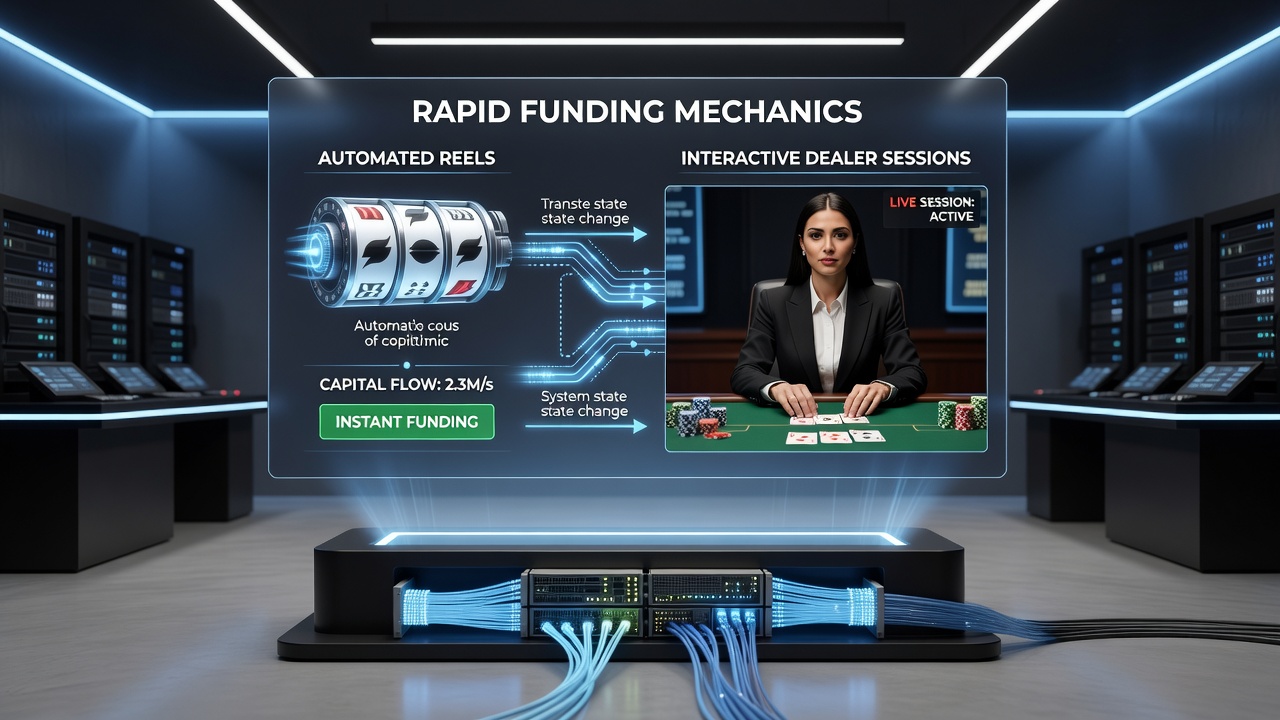
Observers note that platforms using these tools route requests through centralized ledgers that reconcile across multiple game servers. When a player completes a reel session, the updated balance becomes available for table entry without requiring a separate login or additional verification step in most cases. This occurs because session data and wallet states synchronize via secure application programming interfaces that operate in parallel.
Technical Pathways Supporting Format Transitions
Real-time processing engines track player activity across different game categories. A completed spin on an automated reel game triggers an immediate ledger update, after which the same balance can fund a seat at a live dealer table. Studies from payment technology firms show that these updates occur through encrypted channels that maintain compliance with regional financial standards.
One example involves a player who exits a reel game at 8:45 PM, initiates a deposit through an approved e-wallet, and enters a live blackjack table by 8:46 PM. The sequence works because the funding layer sits outside individual game engines yet connects to both through standardized protocols. Figures from transaction monitoring services reveal that such cross-format movements increased by 18 percent in monitored jurisdictions during the first half of 2026.
Player Flow Patterns Observed in July 2026
During July 2026, platform analytics from several operators recorded higher volumes of rapid switches during evening peak hours. Players frequently moved from high-volume reel sessions into lower-stakes live dealer rounds and back again within single login periods. The enabling factor remained consistent balance visibility across game types, supported by funding rails that process without batch delays.
Regulatory data from the Alcohol and Gaming Commission of Ontario indicates that licensed operators must maintain audit trails for every funding event, including those that precede a shift to live dealer play. These records help confirm that funds originate from verified sources before gameplay resumes. Similar requirements appear in frameworks issued by teh New Jersey Division of Gaming Enforcement, where timestamped transaction logs form part of routine compliance reviews.
Security and Verification Layers
Security protocols embedded in rapid funding systems include multi-factor authentication combined with device fingerprinting. These measures activate during each deposit request yet complete within the same short window that allows immediate game access. Research published by the University of Nevada, Reno gaming research unit found that layered verification reduced unauthorized transaction attempts while preserving processing speed for legitimate users.
Platform operators integrate these controls through partnerships with established financial technology providers. The result appears in unified dashboards where players view available funds and active game options without interruption. Data indicates that average time from deposit confirmation to live dealer entry now averages under fifteen seconds across major networks.
Conclusion
Transaction infrastructure continues to evolve toward greater speed and interoperability. The mechanics that link automated reel activity with live dealer participation rest on synchronized ledgers, rapid API calls, and compliance-ready verification steps. Reports from multiple regulatory bodies confirm that these systems operate within established financial oversight structures while supporting fluid movement between game formats.