21 Jul 2026
Algorithmic Cross-Checks and Independent Reviews Safeguard Bonus Calculations in Hybrid Gaming Systems

Hybrid gaming formats combine slot mechanics with live dealer tables and progressive jackpots, creating layered bonus structures that require precise tracking across multiple software layers. Developers embed algorithms that calculate eligibility, trigger conditions, and payout multipliers in real time, while independent auditors examine those same calculations against predefined regulatory standards. Cross-referencing these two streams allows verification teams to confirm that bonus awards match the advertised rules without discrepancies introduced during code execution or data handoff between game modules.
Developer Algorithms in Hybrid Environments
Hybrid platforms route player actions from digital reels directly into live-streamed table sessions, so algorithms must handle seamless transitions while preserving bonus balances and multiplier stacks. Code routines log every spin outcome, wager amount, and feature trigger into structured data packets that feed both the player interface and backend verification systems. These routines incorporate checksums and timestamp sequences that auditors later extract to reconstruct individual bonus paths, ensuring the sequence of events aligns with published game rules.
Random number generators sit at the core of slot segments, yet hybrid titles add conditional branches that activate when players carry forward free spins or cashback credits into live dealer rounds. Developers publish technical appendices that describe variable weighting tables and bonus accrual formulas, giving audit firms the reference points needed for direct comparison against live operation logs.
Role of Independent Audits
Audit firms conduct periodic reviews that sample millions of game rounds and compare observed bonus distributions against theoretical probabilities supplied by the developer. They examine server-side logs for evidence of rounding errors, state mismatches, or unauthorized overrides that could alter bonus integrity. Reports generated from these reviews include statistical summaries, seed-value verifications, and payout-frequency tables that regulators and operators use to maintain compliance records.
Testing laboratories apply both black-box and white-box methodologies, first running games through automated scripts that replicate player behavior and then inspecting source code for hidden variables. The resulting datasets become the benchmark against which daily operational feeds are measured during ongoing cross-referencing exercises.
Cross-Referencing Process and Data Flows
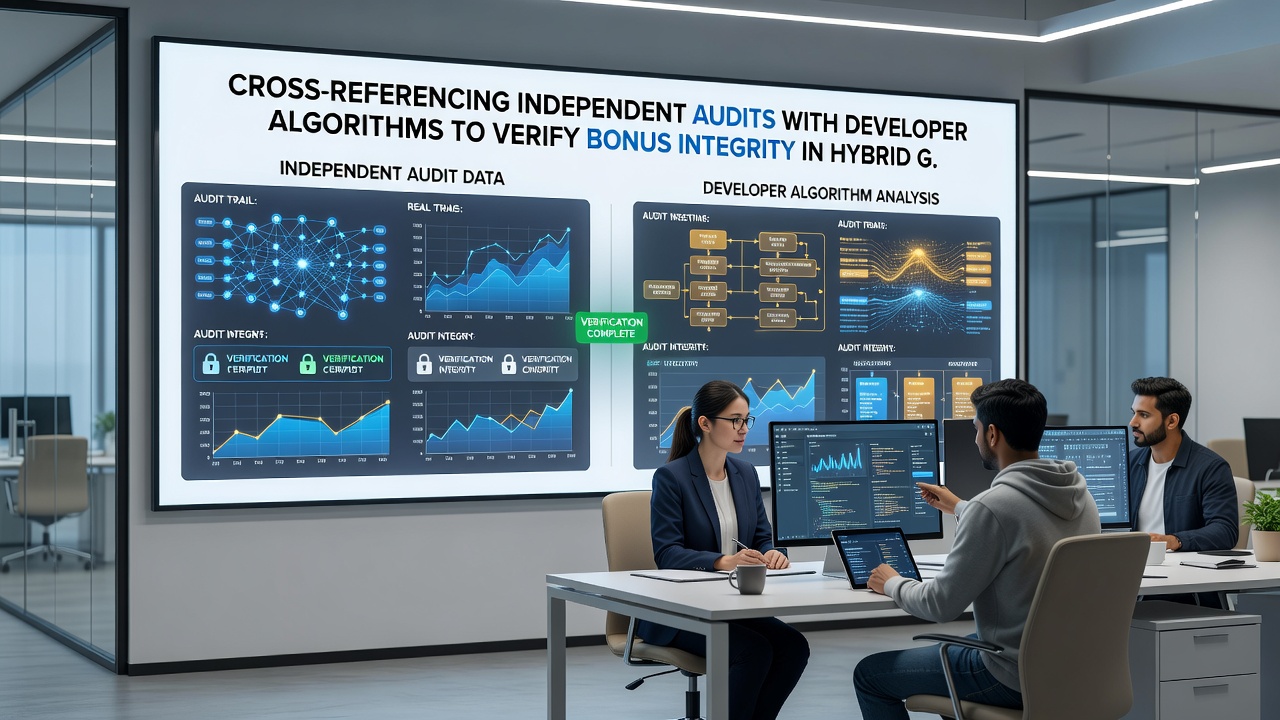
Operators forward anonymized transaction streams to both the developer monitoring portal and the audit firm on scheduled intervals, typically weekly or monthly depending on jurisdiction. Reconciliation scripts align algorithm-generated bonus ledgers with audit-certified outcome histories, flagging any variance that exceeds predefined tolerance thresholds. When mismatches appear, teams isolate the affected game module, review the corresponding code commit history, and determine whether the discrepancy stems from an implementation error or an external data corruption event.
July 2026 saw several European testing houses release updated reconciliation toolkits that incorporate machine-learning classifiers capable of surfacing subtle pattern deviations across hybrid bonus sequences. These tools reduced manual review time while maintaining the requirement for human sign-off on every flagged case before system adjustments are deployed.
Regulatory Context and Reporting Standards
Jurisdictions outside the United Kingdom maintain their own technical standards that reference similar cross-check requirements. The Nevada Gaming Control Board publishes control standards that mandate periodic comparison between certified game algorithms and actual bonus award records. Similar provisions appear in guidelines issued by the Alcohol and Gaming Commission of Ontario, which requires operators to retain both algorithm documentation and independent audit summaries for a minimum retention period.
Academic researchers at institutions such as the University of Nevada, Reno have examined large-scale datasets supplied by cooperating laboratories, identifying common points where hybrid transitions introduce the highest risk of calculation drift. Their published findings provide operators with additional reference material when designing internal monitoring dashboards that mirror the external cross-referencing workflow.
Implementation Challenges and Solutions
Hybrid systems generate high volumes of micro-transactions during bonus chaining sequences, making exhaustive verification computationally intensive. Sampling strategies therefore focus on high-value bonus triggers and edge cases such as simultaneous multi-game promotions. Developers respond by embedding audit hooks directly into the game engine, allowing real-time export of decision trees without exposing proprietary random number generator seeds.
Third-party platforms now offer unified dashboards that ingest both algorithm logs and audit extracts, presenting variance heat maps and drill-down capabilities to compliance officers. These interfaces reduce the time between detection of an anomaly and the initiation of corrective code patches or rule clarifications.
Conclusion
Cross-referencing independent audits with developer algorithms supplies a verifiable chain of custody for bonus calculations in hybrid gaming formats. The process relies on documented data flows, standardized reconciliation scripts, and regulatory reporting timelines that together maintain consistency between advertised rules and actual player outcomes. Continued refinement of sampling techniques and monitoring tools supports ongoing compliance across multiple licensing regions.